Press
WUCT.ORG
The Soundpainter
by Malcolm L. Key | published 04.04.2026

JAZZMANIA
by Sergio Liberati / published 23.03.2026
JAZZGUITARTODAY
by Joe Barth / published 16.03.2026
Artist Features - JGT’s Joe Barth talks to Bjorn Meyer about his new album and exploring new musical territories with the electric bass.
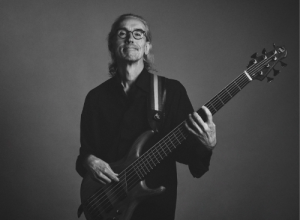
Bjorn Meyer was born in Stockholm, Sweden in 1965 and has lived in Switzerland since 1996. Starting on the piano, trumpet, and guitar, he turned to the electric bass at age eighteen. In 1996, the Nyckelharpa player Johan Herdin, percussionist Bazar Bia, and Bjorn formed the trio Bazar Bia. Since then, he has worked with Persian harpist Asita Hamidi, oud player Anouar Brahem, and pianist Nik Bartsch. Convergence is Bjorn’s second album on the ECM label.
JB: Before I ask about the new Convergence album, tell me about yourself. You grew up in Stockholm, Sweden. During your teenage years, you played guitar in punk-rock bands, then, at age eighteen, switched to bass. What was musically most helpful in your personal development as a bassist?
BM: My first encounter with the electric bass was pure luck and changed my life in an instant. Music had been an important part of my life from childhood, but always as one of many things I was interested in, like a very rewarding hobby. The bass changed all that. I had finally found my voice, and all the sounds I had heard and accumulated for so long without knowing how to make them real could finally burst out. I gladly spent every free minute of every day exploring this new universe, and that gave me a focused motivation that was hugely important.
Two important things helped me on my way and shaped me a lot at that time:
First of all, I realized that so much music that I was really interested in, as a guitar player, had resonated with me mainly because of the bass players involved! As a newly emerged bass player, I had a big library of music I could revisit. I learnt many important lessons by figuring out what made the music I loved work.
Second and definitely not less important: at the time I lived close to a house where many great musicians from Stockholm had their rehearsal spaces, jam sessions, and a general meeting point. Often there was a bassplayer missing — and I was five minutes away — so from the very early days as a bassist I could play with fantastic, experienced musicians from many different styles. From the very beginning, I was surrounded by role models and mentors who later on became colleagues and bandmates.
- readmore
-
JB: Bjorn, to learn more about what shaped your musical values on the bass, to you, what are the three most influential bassists, and please give us a particular album they appeared on that you really connected with?
BM: There could obviously be many more than three, but – and this connects to the answer above! (Bass players “behind” guitar players)
Bass player: Jimmy Johnson
Album: Alan Holdsworth – Metal Fatigue.
I was (and still am) absolutely fascinated by Alan’s playing and compositions but the real magic was when I realized what Jimmy was doing to keep it all together, weaving fully logical basslines through “impossible” chord changes! And then there are these two very short fills at around 2:55 in the title track. 2 times 2 bars that I still remember the very first time I heard on Swedish radio. Time stopped, and I found myself trying to understand how to create such bass parts and how to adapt Alan’s unique chord voicings for the bass.
Bass player: Carles Benavent
Album: Paco De Lucia Sextet – Live One Summer Night
I had been intrigued by flamenco and the work of Paco De Lucia for a long time. My sister gave me the LP for Christmas, and this sextet redefined anything I had imagined possible. It taught me a lot about how to approach strong musical traditions with deep respect and still find my own space within and make the music even stronger.
It is absolutely incredible how Carles takes part in every function in the group – from rhythm and chords to melody and harmony – without ever losing the bass function of keeping all the sounds together and allowing the others to shine.
The bass solo in “Alta Mar”, the comping — if you can call it that — in Solo Qiero Caminar”.
Also, the studio album Solo Qiero Caminar was a game changer, just listen to the duo version of “Monasterio de sal.”
Bass player: Anthony Jackson
Album: (for once not a guitar player) Michel Camillo – Why Not!
I had been a fan from hearing Live In Central Park by Simon & Garfunkel but his playing with Michel Camillo was another ear-opener for me. Maybe also because my main working band at the time was a Latin-jazz band, so I guess it was a good match.
Having said that, Anthony was a huge inspiration across styles and genres over all the years we were fortunate enough to have him with us!
… that was already three … and I didn’t even get to mention Steve Swallow, Marcus Miller, Aston Barrett, Jaco Pastorius, Skuli Sverrison, Meshell N’Degeocello, Carol Kaye, Pino Palladino, and all the fabulous upright players that have inspired me so much – Charlie Haden, Palle Danielsson, Scott La Faro, Miroslav Vitous, and Eberhard Weber.
.. but the three I mentioned were definitely very important at the time!
JB: Convergence is you recording alone with your six-string bass. Your music has (for lack of better words) a very ethereal sound. How do you describe your music?
BM: The idea of an electric bass as a solo instrument triggers very diverse and often contradictory expectations. Many people have some idea of what a bass can do, and they expect anything from “root notes and fifths” to fast, equilibristic slapping frenzies with the comment, “How can you do that for more than three minutes per show?”
If I were to describe this program, I tend to use a few different approaches depending on who I am talking to:
Electric bass in acoustic space — I think it sums it up very well and gives some idea of what to expect without putting the music in a certain genre. For me, it is very important to share the music’s acoustic experience rather than focusing on the instrument’s electric character.
This music is also a mirror of my musical and personal journey through this life. The bass allows me to express myself without the risk of having my words misunderstood, and everything has a place in this music. Even though there are compositions, performing solo allows a unique freedom of interpretation depending on my state of mind that day.
Generally, I would be very happy to just say – new music for electric bass guitar!
JB: The album opens with “Convergence,” a song with deep textures, loops, and very staccato melodic figures. Talk about this.
BM: The album starts with a distorted chord progression – somewhat inspired by Alan Holdsworth – that I simultaneously feed into a loop through a shimmer reverb that I slowly fade in, played backwards. I find this texture very inspiring, and since it is all created live, it always turns out a bit different.
A pattern in 14/8 is presented – like a teaser – before an improvised part takes off in another direction. The pattern comes back in two versions: the original 14/8 (28/16) and a shortened 27/16 version. I loop the shorter version and play the original one on top, creating the rhythmical displacements you hear at the end.
I find such layering of patterns of different lengths very interesting, and it is a natural part of my vocabulary after many years of playing various kinds of minimal music with Don Li’s Tonus, Nik Bärtsch’s Ronin, NEN, and many others.
JB: The album consists of nine of your compositions. Were these songs all composed for this project? Talk about that process.
BM: Yes and no. I didn’t sit down to deliberately compose a fully new repertoire with this album in mind.
However, from the very first concert I played to release my first solo album, Provenance, in 2017, I noticed that the material and my playing were already shifting. Creative accidents happened, and new ideas emerged during concerts, soundchecks, and travels. After almost six years and many concerts, I had a tour in Japan and realized that there was nothing left of Provenance in the program. Then it took some time for Convergenceto emerge — during which the material continued to evolve.
In hindsight, I can see many stages of the development of Convergence that were definitely meant to become a new repertoire in its own right. One aspect of the name of the album reflects the convergence of ideas, moods, emotions, life, and time into this moment.
JB: Talk about the six-string bass you used in this recording. Did you use amplification, or was it mainly recorded directly?
BM: I play an MTD 635 (#160), an instrument that found its way to me by very lucky coincidence in New York in late 1995. I have played this very instrument on everything involving electric bass ever since.
As I mentioned earlier, the acoustic component is very important to me, and I am very lucky to have the support of producer Manfred Eicher for this approach. We recorded in a big, wonderful-sounding room that often hosts symphony orchestras and recordings of large film-music projects. The sound engineer Michael Hinreiner knows the room very well and was also very keen on the idea of making an acoustic-style recording.
I had a pair of Genelec 8030 Studio monitors and a small subwoofer behind me for the full signal (bass and effects) and a pair of satellite speakers further away, where I sent effects only (delays, reverbs, etc., but no direct bass signal) in order to fill the room and have a spatial experience.
This setup was then recorded using a lot of microphones to pick up all the aspects of the room, but also close miking on the instrument to pick up the acoustic sound. Much like you would approach a serious recording of any acoustic instrument, like a classical guitar or a cello.
Obviously, the line outputs of the bass and the effects were also recorded, but very little of that was used in the mix. I am very happy with the result, and I think you can really have the experience of sitting in the room with me when listening to the album.
JB: “Drift” is filled with harmonics. Tell us about that song.
BM: After Jaco’s “Portrait of Tracy,” anything involving harmonics on the bass is a bit sensitive. However, the range of the six-string and playing harmonics with a bit of a scraping sound with the plectrum does add another texture that I find very inspiring.
The piece started out as a reflection on the ice breaking on a river after a strong winter. Deep cracks forming, small pieces of ice breaking loose into the stream. Obviously, that is only my very personal picture. Some have said that it reminds them of northern lights, which is also a beautiful thought!
JB: I love the sense of movement you create in the song “Motion.” Talk about this composition.
BM: Thanks! It took me a long time to become fluent in playing it and for the piece to develop to its current form. It started with the plucking pattern in 11/8 and the first two chords. For a long time, I couldn’t find a way out of this tonality, but the more my right hand started feeling comfortable in any tempo, I started hearing a harmonic development that the left hand was kind enough to accommodate.
“Motion” is a good example of two things that inspire me: I like it when odd meters still can have a dancing quality to them, and I often find this kind of incremental approach to harmony very interesting.
JB: This is your second ECM album. What do you appreciate about working with producer Manfred Eicher and ECM Records?
BM: It is my second solo album on ECM, but I have been lucky enough to work with Manfred on four albums with Nik Bärtsch’s Ronin and two albums with Anouar Brahem. All very different productions.
I am fascinated by his enormous dedication to music and very inspired by his way of listening. Knowing that he is listening changes my focus as a player. From being concerned with playing “right” it becomes all about playing in a way that allows for a deeper level of experience. Taking risks and adapting the performance so that the music translates well to someone who is attentively listening. He has the ability to ask or suggest things that allow me to shift focus away from the microcosm of “my composition” to the macrocosmic dramaturgy of the music.
This overview also applies to the full album, in how he balances the tracks and puts the track list together. For example, the idea of opening with “Convergence” was far from my original plan, but it turned out exactly right. Not to mention the choice of cover picture, a very unexpected but perfect match for me.
JB: Do you view the entire album as a kind of symphony or tone poem with multiple movements?
BM: I definitely see the album as a whole body of work in itself and a thoughtfully curated dramaturgical statement. But I still see it as a collection of separate compositions rather than multiple movements. The album has one sequence, but in a concert situation, I can freely choose another path to adapt the dramaturgy to the room, the audience, and the setting.
Having grown up listening to LPs, it is very important to me that listening to the full album adds an extra dimension to each song’s experience. Especially in this age of streaming and separate songs put together in more or less random playlists, I think it is more important than ever to at least try and compose as deep listening experiences as we possibly can.
JB: The album ends with the reflective “Nesodden.” Is there any connection with the peninsula in Norway?
BM: Yes – the song was written in a small cottage at Nesodden, overlooking the fjord running into Oslo. I was performing at the jazz festival there and arrived a day early due to travel issues. Sitting there, I saw a family of geese and two canoe paddlers in a beautifully respectful interaction. I guess it had something to do with who could land first or something, but all of a sudden, this whole tune had formed. I did rework some minor details over time, but the song was like a gift from Nesodden. It very seldom happens in that way.
JB: You moved to Switzerland a few years ago. Talk about the gigs you do in Europe and how you make a career in music work for you.
BM: You are kind – it has already been 30 years.
One thing I really appreciated coming from Sweden was how well-connected Switzerland is. In four to five hours, you reach Paris, Milano, Munich, and many other comparatively large cities by train or car! This makes touring so much easier than from Stockholm, where you either spend a full day just to reach the country’s border, or you have to fly all the time, which I don’t really like.
Interestingly, both Sweden and Switzerland are quite small countries, yet they have very strong, yet distinct and creative music scenes. There are also many interesting venues and festivals. Since I am involved in quite a few different projects all across Europe, Iran, and North Africa, my touring schedule will depend on which projects are active at the time. At the moment, my focus is on my large ensemble, Garden of Silence — 9 Musicians from 3 continents — on the one hand, and the solo project on the other.
I feel so very blessed to have the opportunity to present this music to so many fantastic audiences and to be part of so many inspiring collaborations.
Like everywhere, the economic situation for live music is changing quite rapidly, also here. However, I am confident that we will always need this form of human interaction, being in the same space at the same moment in time, sharing the same experience. Music is such a strong healing power, and we need it more than ever.
OFFTOPICMAGAZINE
by Riccardo Talamazzi | published 7.3.2026
SPETTAKOLO
by Raffaello Carabini / published 10.3.2026
Guitar Player
by Lothar Trampert / published 2.3.2026
BJÖRN MEYER: E-Bassist & Horizonterweiterer
(....) Gerade ist sein zweites Solowerk erschienen, ,Convergence‘, wieder auf ECM Records, produziert vom legendären Label-Gründer Manfred Eicher, ohne den es eine Menge legendärer Alben zwischen Jazz und dem Rest der Welt nicht gegeben hätte. Alleine was die Saitenkünstlerinnen & -künstler angeht, war und ist ECM wahrscheinlich das weltweit einflussreichste moderne Jazz-Label: Namen wie Terje Rypdal, Steve Swallow, Steve Tibbetts, Barre Phillips, Miroslav Vitous, Ben Monder, Collin Walcott, Wolfgang Muthspiel, Marc Johnson, Bill Connors, Eberhard Weber, Pat Metheny, Mick Goodrick, Arild Andersen, John Scofield, John Abercrombie, Bill Frisell, Charlie Haden, Eivind Aarset, Egberto Gismonti, Dominic Miller, Jakob Bro, Avishai Cohen und Dave Holland belegen das. Und ja: Björn Meyer gehört hier hin.
Neun Tracks hat Meyer im September 2024 in den Bavaria Musikstudios München eingespielt – oder besser: Er hat Klanglandschaften, vielschichtige Kompositionen und große akustische Raumkunst kreiert. Und so liefert der Opener und Titeltrack des Albums gleich tiefe Hallräume, Backwards-Sequenzen und repetitive Riffs und Pattern, die fast vergessen lassen, dass man es hier mit dem tieftönenden Instrument E-Bass zu tun hat. (....)
JAZZ MAGAZINE
by Jean-Pierre Vidal / - N° 790 - Mars 2026
NOUVEAUTÉ **** Rares sont les albums solos publies par des bassistes, même si, déjà sur le label ECM, Barre Philips puis Eberhard Weber avaient marqué les esprits en s'y essayant. C'est aujourd'hui à Björn Meyer et sa basse électrique six cordes de reprendre le fil de l'histoire. Le Suédois s'est fait remarquer notamment au côté du pianiste Nik Bärtsch. C'est en partie l'influence de ce dernier qui est notable dans "Convergence" où il manie un langage proche, utilisant à sa façon boucles et modules harmoniques répétitifs comme principaux dispositifs. Avec intelligence et maitrise, il utilise un panel d'effets créatifs et complexes, déployant accords et lignes superposées pour créer d'étonnantes structures, comme s'il cherchait à instaurer un dialogue constant avec lui-même. Au fil de neuf compositions calmes mais empreintes d'un intense lyrisme, Björn Meyer explore avec finesse des formes souples et changeantes. Avec Hope, il parvient aussi à déployer une grande pureté mélodique, tandis que Drift laisse résonner à travers le pincement subtil des cordes toute l'ampleur et la dynamique de son instrument. D'une beauté profondément touchante, et dénuée de toute prouesse technique superflue, "Convergence" est un superbe voyage, poétique et méditatif, au cœur de la basse électrique.
EUROJAZZIST
by Nikola Marković / published 24.2.2026
Where melody, musicality, and organic rhythm define the solo voice
..."At first glance—and judging by its nominal structure—Convergence may seem like one of those albums we add to a playlist for contrast, perhaps as a pause after an intense jazz recording dense with virtuosic playing and elaborate arrangements. After multiple listens, however, I began to experience it quite differently: as an essential musical statement and, so far, one of my favorite releases of 2026."
RONDO MAGAZIN
by Josef Engels / published 21.2.2026
..."Um in der Filmsprache zu bleiben: „Convergence“ ist kein Blockbuster mit Explosionen und Muskelspiel, sondern feines Autorenkino mit Tiefenwirkung."...
NO TREBLE
by Kevin Johnson / published 16.2.2026
Jazz bassist Björn Meyer has returned to the forefront with Convergence, his second album that expands on the concepts of solo electric bass. The nine-song collection is recorded “live” in the studio with Meyer adding effects such as delays and reverb in real time. The compositions sprouted from touring behind his debut, Provenance, and feature new techniques on his six-string.
- readmore
-
“In the first few tours after the release of Provenance, I played mostly material from that album. However, new inspirations, ideas and ‘accidents’ started finding their ways into the performances,” Meyer explains. “In a quite slow but steady way these new directions stayed with me, developed over time, and grew up to become a fully new repertoire. Experiences gathered in the last few years of more intense solo playing have converged into this album. The many solo performances have also allowed me to go deeper in my research of the six-string electric bass. New playing techniques, sounds and ways of improvising and composing for and with this instrument have found direct ways into my musical practice, and not only in a solo context.”
Some of those new sounds come from using magnets and metal bars to affect the strings’ vibrations, as he does on “Rewired.” On “Magnétique,” he achieves a unique tapping tone “thanks to a special construction of magnets, a spring, and some drops of superglue.”
Watch his mesmerizing playthrough of “Magnétique.”
His fluid fingerstyle creates waves of emotions on “Gravity.”
JAZZVIEWS
by Nick Lea / published 29.1.2026
ECM 2844 / 781 2831
Björn Meyer (6-string electric bass)
Recorded September 2024
All about melody, expression and the weight of each carefully placed note.
Jettisoning the more familiar role of the electric bass guitar, the bassist has been the anchor in Nik Bärtsch’s electric group Ronin and in the acoustic setting of the oud with Anouar Brahem, Meyer returns to ECM with his second solo album for the 6-string electric bass. Revisiting his debut album for the label as a solo artist Provenance released in 2017 and then listening to the new recording it is remarkable how far Meyer has developed this most demanding of roles. Like many solo recordings, the bassist is aware of the limitations of his instrument in such a stark and often lonely setting and how the use of the recording studio can serve as useful tool in helping orchestrate the music. Just has importantly, Meyer is also acutely aware that the music must also work in a live setting, and the balancing act between the two disciplines is handled with great skill and sensitivity.
- readmore
-
All the compositions have been composed by Meyer and serve not so much as showcases for virtuoso playing but bring out the lyrical side of his instrument and use of timbre and dynamics to bring out the inherent melodies within the music. The gentle ballad ‘Hiver’ is not what one expect to hear, and flashy technique is eschewed allowing the rather beautiful pieces penned by Meyer to be the focus of your attention.
The delicate melodic curve of Meyer’s writing come to the fore on the opening title track with its subtle use of an electronic backwash before the infectious groove of the piece is allowed to break through; and is again brought into sharp focus on ‘Gravity’ where compositional and improvisational content are the ultimate consideration.
It is only on ‘Rewired’ where Meyer modifies the sound of the bass using metal bars and magnets allowing the emphasis to shift to the process rather than the resulting music. Having said that, on the track that follows, ‘Magnétique’ takes the technique a step further also combining a tapping technique on the strings and one is immediately captivated by the composition so that the technical aspect of the hypnotic groove and melodic development engages the senses.
In a perfectly balanced programme, Meyer brings the album to a close with the excellent ‘Nesodden’ which like opening track is all about melody, expression and the weight of each carefully placed note.
BASSMUSICIANMAGAZINE
by Bass Musician / published 26.1.26
New Album: Björn Meyer, Convergence
With Convergence, his second solo album, Swedish-born bassist Björn Meyer further develops music on the blueprint established with his recording Provenance (2017), making use of the technical potential of the bass guitar to establish striking sonorities and grained textures while also being acutely aware of the acoustic space in which his sounds emerge. In its review of Björn’s previous solo statement, London Jazz News found the bassist demonstrating “that melodic high-jinks and emotional intensity aren’t just for those who inhabit the treble stave. Meyer’s bass sings.” Here the bass player’s atmospheric explorations conjure images in the mind. His technical innovations appear expanded in a programme of songful quality. In brief it feels complete in itself, more than a document of instrumental prowess.
- read more
-
Meyer’s musical material is realized in real time, played ‘live’ in the studio, with effects and delays and reverbs – colors of the modern bassist’s palette – integrated in the moment. The pieces heard on Convergence came together gradually: “In the first few tours after the release of Provenance I played mostly material from that album. However, new inspirations, ideas and ‘accidents’ started finding their ways into the performances. In a quite slow but steady way these new directions stayed with me, developed over time, and grew up to become a fully new repertoire. Experiences gathered in the last few years of more intense solo playing have converged into this album. The many solo performances have also allowed me to go deeper in my research of the six-string electric bass. New playing techniques, sounds and ways of improvising and composing for and with this instrument have found direct ways into my musical practice, and not only in a solo context.”
This journey to the heart of the bass guitar has sometimes involved oblique approaches and ‘preparations’ akin to Cagean experimental tradition. On the improvisation called “Rewired”, for instance, Meyer uses magnets and metal bars to change the vibration of the strings, going further on “Magnétique” whose muted and metallic sound is achieved “thanks to a special construction of magnets, a spring, and some drops of superglue.” The tapping style deployed on “Magnétique”, moreover, makes it seem almost like a percussion piece, suggestive of the cross-rhythms of mbira music. Meyer is continually exploring the possibilities of his instrument, whether emphasising that this is a bass guitar – see the elegant polymetric plucking of “Gravity” – or setting free broad swaths of ambient sound as on “Drift”. Each piece becomes an episode in an unfolding narrative.
“At some point in the mixing and sequencing process, Manfred Eicher made a boldly wonderful suggestion to rearrange the tracks, and made ‘Convergence’ the opening track. That decision set in motion a very strong dramaturgical flow that ends beautifully with ‘Nesodden’,” Meyer notes. “It became a story that could best be told in this way, one that I find sparks imagination and is full of surprises while still allowing for contemplation.”
Convergence was recorded at Bavaria Musikstudios, Munich, in September 2024, and produced by Manfred Eicher.
JAZZ-FUN.DE
text and photos by Robert Fischer / published January 26
Björn Meyer und die Emanzipation (s)eines Instruments

HIGHRESAUDIO
Listening Tipp
by Thomas Semmler / published 23.01.2026
ALLMUSIC
by Matt Collar / published 23.01.2026
Convergence Review by Matt Collar

Swedish bassist Björn Meyer pulls you deep within his low-pitched dream on his second solo ECM album, 2026's Convergence. Known for his work with the progressive folk trio Bazar Blå, Meyer has explored an array of styles, working with Tunisian oud master Anouar Brahem, Persian-born Swiss harpist Asita Hamidi, and adventurous Swiss pianist Nik Bärtsch. While he brings all of this vast boundary-crossing experience to bear on his solo work, he distills his vision, playing everything on his six-string electric bass. Acting as a sound sculptor, he carves great tonal bodies that sweep over you like snowdrifts on arctic tundra. Often, as on the opening "Convergence," he multi-tracks himself, laying down a sea of harmonic chords that groan with a hint of natural reverb before answering with a series of fluttering arpeggiated riffs like gulls over a dusky inlet. Equally evocative moments follow as he conjures a nightmarish doom on "Drift," contrasting guttural bass moans against the twilight bell-tone sparkle of fretboard harmonics. While much of the album has a new age tone poem quality, there are equal moments of tender melody, as on "Gravity," which sounds like a contemporary folk song done instrumentally, or "Hiver" which has the measured introspection of pianist Bill Evans' classic '60s trio. With Convergence, Meyer has crafted an album that's as technically virtuosic as it is affectingly atmospheric.
FIFTEEN QUESTIONS
Björn Meyer Shares his Creative Process
by Tobias Fischer / published 23.1.2026

Listening to Meyer play his bass is like looking deep into his eyes – an intimate connection wordlessly bridging the divide between sender and receiver. Locking into tactile patterns, then again feeling its way through dreams of baroque beauty, his new ECM album creates a space of deep resonance.
Part 1
Name: Björn Meyer
Nationality: Swedish, Switzerland-based
Occupation: Bass-guitarist, composer
Current release: Björn Meyer's new album Convergence is out via ECM.
Recommendations for Bern, Switzerland:Whenever you get a chance to visit make sure not to miss “Orbital Garden” - a wonderfully unique venue for inspiring music. … and a coffee, a concert or an exhibition in PROGR - an equally unique “Centre for cultural production” in an old school-building in the middle of town. In summer you should also try and get a swim in the river Aare.
Topics I am passionate about but rarely get to talk about: I am passionate about acoustics — sound and resonance — but I also do get to talk about it on a regular basis. See the following excerpt from the liner notes to Provenance for example:
The electric bass in acoustic space
“..Sound”
I have been fascinated by acoustics for a long time now, how they affect the creative process and our experience of sound. Already very early in my relationship with the electric bass I came across what many see as a paradox. Even though the instrument Is technically non-acoustic, the music, as well as its impact on a listener, is deeply Influenced by the properties of the space where it is played. The many different ways in which acoustics affect my compositions, improvisations and ultimately each performance, have always been sources of surprise and inspiration. There Is definitely a second member in this solo project - the room!
- read more
-
f you enjoyed this Björn Meyer interview and would like to stay up to date with his music and upcoming live dates, visit his official homepage. He is also on Instagram, Facebook, and bandcamp.
Where does the impulse to create something come from for you? What role do often-quoted sources of inspiration like dreams, other forms of art, personal relationships, politics etc play?
For me, “to play” is the most important state of being in order to allow for any creative process to take hold and unfold. Most new ideas, impulses and creative accidents come to me whenever I find myself fully immersed in the act of playing - without trying to achieve something.
Put in a larger context, I don’t see creating music - or any art for that matter - as something separate from being alive. Therefore the main source of inspiration for any musical idea has always been a more or less chaotic blend of what affects me as a human being in everyday life. Nature, encounters with friends, loved ones and strangers, world political developments, environmental issues, inspirational art, loss, joy etc.
However, I need to open the door — to play — in order for any new idea to manifest.
For you to get started, do there need to be concrete ideas – or what some have called a 'visualisation' of the finished work? What does the balance between planning and chance look like for you?
The process and the balance differs from project to project. But for my solo-work I am definitely very open to creative accidents (call it chance!), more so than I am when more people are involved.
As a solo-performer I can react on any impulse and change musical direction, dynamic expression, intensity or even key- and time-signature in an instance if it makes musical sense to me. That is a great creative freedom but also a huge responsibility that goes as much for the recording of a new repertoire as for performing live.
I do have a plan when I start a concert or a recording but there are always parameters that can’t be fully controlled and that will ultimately impact the way the music unfolds. How does the room react to dynamics? Are there frequencies that resonate with the venue or emotional resonances within the audience? How does the instrument - and how do I - respond to the room? etc.
Is there a preparation phase for your process? Do you require your tools to be laid out in a particular way, for example, do you need to do 'research' or create 'early versions’?
I do like some measure of order (being born a Virgo) but since I am travelling quite a lot I have learned to also enjoy the moment of slight chaos in daily routines and embrace the challenges of creating under less than optimal circumstances.
It often takes time for the music to reach a performable structure, form and dramaturgy. The many steps on the way can be seen as research, but often it is more of an intuitive way of playing with the material that leads to a version that I feel comfortable presenting to the world.
Again, the important thing for me is to not want to achieve a certain result but to be open to the process and listen honestly. Obviously this is different when writing for larger ensembles where a repertoire often needs to develop in a more structured way.
Do you have certain rituals to get you into the right mindset for creating? What role do certain foods or stimulants like coffee, lighting, scents, exercise or reading poetry play?
I do feel good when I have the chance to exercise or meditate regularly and I do enjoy having a cup of coffee every so often, but I can’t say that they are necessary rituals for creating.
A somewhat regular daily routine (without touring) is very helpful for me to get things done. However, next to creating new music, there are many things that want and need to get done and since I can not force inspiration, I will share the time between many different aspects of being a part of the society I live in - music obviously being a very important part of it.
Sometimes a great cup of coffee can trigger a new idea but most of the time something completely unexpected will show the way and then it is helpful if I have the chance to act on that impulse without having to rush to the train or check-out of a hotel ...
For Convergence, what did you start with? If there were conceptual considerations, what were they?
Convergence is the result of time and an ongoing evolution. Starting from the very first concert I played after the release of my first solo-album Provenance in 2017, my relationship with my instrument, the repertoire and the act of performing solo has gradually deepened and developed.
At the same time, life itself has offered many changes, challenges and wonderful surprises that have strongly influenced the trajectory of what I feel the need to, and what I am able to express in my music.
Conceptually I had only one thought about this release: to stay true to the idea of recording and presenting the “Electric Bass in Acoustic Space”. There are still so many sounds and emotional levels of the instrument that, at least to me, can only be experienced when there is a room involved. Starting with his invitation to record my first solo album Provenance in the acoustically fantastic Auditorio Stelio Molo in Lugano Manfred Eicher (producer and founder of ECM) has been very supportive of this ambition.
For Convergence he invited me to work in an equally inspiring room at Bavaria Music Studios in Munich and the way in which Tonmeister Michael Hinreiner managed to record this repertoire has again set a new standard for me.
Tell me a bit about the way the new material developed and gradually took its final form, please.
I remember the feeling when I first played the opening two bars of what slowly became “On Hope”. It was something I hadn’t heard before and the sound triggered many excursions into similar ideas.
At some point I was juggling a handful of parallel compositions until they all finally boiled down (converged) into one. Without knowing it at the time that was the start of the new repertoire.
Looking back, this process repeated itself on other compositions as well like “Gravity” and “Motion”. “Magnetique” developed in a slightly different way and is still very much an improvised structure.
It changes every time I play it, develops and takes new paths, which is something I really enjoy. “Nesodden” came out of a moment watching the interplay between two canoe-paddlers and a family of geese outside Oslo. The melodic development and harmonic structure came in a single flow and I only had to (wanted to!) do some minor adjustments to the form.
“Rewired” is an improvisation using the very inspiring sonic possibilities of preparations. I have done a lot of experiments over the years and the palette is growing.Part 2
Many writers have claimed that as soon as they enter into the process, certain aspects of the narrative are out of their hands. Do you like to keep strict control or is there a sense of following things where they lead you?
On one hand I try to step out of the way and let the music unfold as naturally as possible. At times I have the feeling I need to control and in some sense coerce the music to move in a certain direction but such actions rarely make it into the final version of a composition. More often, control or action are only helpful means to get unstuck.
It is a bit different when there might be certain technical aspects to the compositions that sometimes need control in order to be reproducible. Be it a playing technique or some special effect.
There are many descriptions of the creative state. How would you describe it for you personally? Is there an element of spirituality to what you do?
Being in touch with the essence of me. Neither wanting to achieve anything nor trying to prove something to the world or to myself, merely aspiring to be as directly human as I possibly can and sharing that state in the most honest way possible.
I do feel there are spiritual elements in everything we do - as long as it comes from a space of open mindfulness, be it cooking or creating a piece of music.
Once a piece is finished, how important is it for you to let it lie and evaluate it later on? How much improvement and refinement do you personally allow until you're satisfied with a piece? What does this process look like in practise?
Evaluation, improvement and refinement are for me integral parts of the compositional process. I take my time until I bring out a composition to an audience or present it to the world.
The most important factor for me, before I call it a finished piece, is that I feel it has something to say that resonates with my view of whatever is happening in my world. I also need to have reached a state where I am able to perform it with confidence.
However, except for some very strong compositions that have lived through many different generations of concert-situations, a piece is very seldom finished (in the sense of unchangeable) for me.
As I mentioned earlier, every performance or recording offers many alternative parameters that will ultimately affect the way I play or what I think the music needs in order to make sense for me at that moment. A listener will recognise the composed parts of the repertoire (I think) but there will be detours, alternative endings or beginnings and harmonic or rhythmical changes appearing in each performance.
Whenever I feel that a composition does not evolve or becomes too strict, I tend to take them out of the repertoire.
How do you think the meaning, or effect of an individual piece is enhanced, clarified or possibly contrasted by the EPs, or albums it is part of? Does each piece, for example, need to be consistent with the larger whole?
Working with Manfred Eicher and ECM has a huge impact on the contextualisation of each composition and the dramaturgy of the whole album.
The same pieces can tell a very different story depending on the sequencing of an album. For me - having grown up in a time when we were still listening to full albums - this is a very important aspect of the experience of music.
I didn’t compose the pieces while having a certain album in mind, but they are all parts of me and my development over the years since the last release which already makes for a certain consistency. The album however tells a bigger story than the pieces by themselves would ever be able to do.
What's your take on the role and importance of production, including mixing and mastering for you personally? In terms of what they contribute to a song, what is the balance between the composition and the arrangement (performance)?
As creative artists, we always have a responsibility towards the audience to present the best, most honest art that we can in the best way possible. For me every part - from composition via performance to production and artwork - has to be taken very seriously.
There is no such thing as “one fits all” - meaning that a great album needs expensive studios or Grammy award winning engineers - but there has to be an ambition and a coherent approach behind what we are putting out. A bedroom recording can be the exact right thing for one piece whereas the next one needs a church and a full recording-crew - we need to be responsible about this and find the best way for each particular situation.
A good song can convey its message even in a poor performance or still shine through a bad sounding production, whereas a great production can never really put any real value into a poor composition.
Music and the accompanying artwork are often closely related. Can you talk about this a little bit for your current project and the relationship that images and sounds have for you in general?
Again, having the pleasure of working with Manfred Eicher and ECM, the artwork is always an inspiring addition to the album. Images and sounds are related in so many ways and many times I find myself relating to certain pictures as strongly as I do to music.
In the best of situations - which I think Manfred is a master of - the artwork gives a hint and opens a door to imagination without giving any directions where the imagination should flow.
After finishing a piece or album and releasing something into the world, there can be a sense of emptiness. Can you relate to this – and how do you return to the state of creativity after experiencing it?
Maybe not so much an emptiness but a radical change of pace that can be quite difficult to handle at times. Leading up to a release or the completion of a large body of work, there are so many steps that all demand full attention and very often make me work strange hours for extended periods of time.
I also find the change of focus — from very intimate, concentrated on every detail and every aspect of the work, to fully public, at the mercy of critics, “the market” etc. — quite challenging at times. Afterwards I can feel like in a state of jet-lag before I am able to re-integrate into more normal behaviour. Luckily I am surrounded by wonderful, understanding and very supportive human beings.
The simple act of playing my instrument is what brings me back to a centred state of mind and to creation.
I would love to know a little about the feedback you've received from listeners or critics about what they thought some of your songs are about or the impact it had on them – have there been “misunderstandings” or did you perhaps even gain new “insights?”
That’s what I think is the magic of music and what never seize to amaze me: every listener can have a very own interpretation, and they are all valid. I have been blessed with many deeply touching conversations with listeners and also some critics.
What makes me especially happy to hear is that most listeners, both after live-performances and after hearing my first album, share their emotional reactions on the music without paying attention to, or even noticing!, what instrument it is played on.
As a listener myself, the most profound experiences come when I just let the music be without analysing.
Obviously some reactions are easier for me to incorporate in my own understanding of the music than others, but I have definitely gained many inspiring facets to my music by listening to the reactions from open hearted listeners.
Creativity can reach many different corners of our lives. Do you personally feel as though writing a piece of music is inherently different from something like making a great cup of coffee? What do you express through music that you couldn't or wouldn't in more 'mundane' tasks?
There is no inherent difference in the task itself when it is based in thoughtfulness and I can carry it out with a concentrated ambition to do the best I can. Of course there are many tasks that I carry out with a less inspired mindset - that is definitely another story.
However, music has the unique ability to reach listeners in many magical ways that other tasks can’t. I hope that I am able to share more of who I am, give a deeper insight into my world and evoke more profound and diverse experiences through the music I play than I would be able to offering even the best cup of coffee.
MARLBANK
published January 2026
JAZZECHO
published 22.1.2026
Eine Reise zum Herzen der Bassgitarre

Auf seinem neuen Soloalbum “Convergence” bringt der E-Bassist Björn Meyer die gesangliche Qualität seines Spiels noch stärker zur Geltung und beschwört mit seinen stimmungsvollen Erkundungen Bilder im Kopf der Hörer herauf.
THE BIG TAKEOVER
by Michael Toland / published 21.01.2026
SOUNDS & BOOKS
by Sebastian Meißner / published 19.1.2026
BETWEEN SOUND AND SPACE
BJÖRN MEYER: CONVERGENCE (ECM 2844)
by Tyran Grillo | published January 17, 2026
Björn Meyer 6-string electric bass
Recorded September 2024
Bavaria Musikstudios, München
Engineer: Michael Hinreiner
Cover photo: Jan Kricke
Produced by Manfred Eicher
In the wake of 2017’s Provenance, Björn Meyer widens his territorial reach on the six-string electric bass with a second solo album that feels less concerned with claiming ground than with listening for its contours. His ever-deepening attunement to space and the forms that allow it to exist becomes the true subject here, and his skills are offered not as a display of mastery but as the slow emergence of a language still discovering its grammar. What might initially register as post-production illusion reveals itself, upon closer attention, to be articulated in real time through a deft choreography of live effects. Magnets prepare the instrument for unfamiliar conversations, finger tapping redraws its internal architecture, and entire washes of sound are permitted to overtake the listener in search of calm.
- read more
-
The album opens with its title track, setting a narrative in motion while refusing to pin it down. Each encounter reshapes the story, rearranging its implications without altering its essence. A fuzzy tone carries a gentle spirit within it, one that moves the way sediment drifts and resettles after a glass of wine has been swirled. Notes surface in reverse order, establishing a tonal context in which the debris of this slow-motion tornado can be articulated through pointillism. The resulting shape and flavor recall Steve Reich’s Electric Counterpoint, though here the patterning feels provisional, animated by a restless urge to stray just as readily as it returns. Deeper strums and higher callings exchange roles, and the sky above the music darkens by degrees, one shade at a time.
As the climate of “Hiver” briefly brightens the scene, it emits a particular quality of light, the muted radiance that arrives under an overcast sky on the verge of snowfall. In this moment, it becomes clear that the narrative forming across the album is inward-facing. This is not the documentation of a journey so much as the journey undertaken by the one who documents. When the echoing bird calls of “Drift” begin to tug at the soul, they do not ask for permission. Direction is accepted without resistance, and the listener seeps further into the flow of time, less a passenger than a dissolving witness. “Gravity” resists the comfort of arrival altogether, suspending any promise of destination in favor of an elliptical song that bends back on itself. Meyer’s guitaristic approach draws a rose’s worth of texture and fragrance from the bass, unfolding petal by petal until only the stem remains. In “Motion,” it becomes a receiver tuned to a distant transmission. Subtle glitches and pulses trace the heartbeat of another time, and when that signal falls silent, only an echo remains to confirm it ever existed.
With “On Hope,” fluttering wings and a tactile fuselage lend lift to the album’s vessel, suggesting ascent without insisting upon it. Just as the cusp seems within reach, a malfunction intervenes, pulling everything back into the improvisational clang and hum of “Rewired.” The interruption does not feel punitive but necessary, a reminder that flight depends on friction as much as flow. When the circuitry is restored and life resumes its forward momentum, “Magnétique” extends the promise of repair. Its circular motifs and palpable sense of contact arrive as a blessing to worn ears, sound reconnecting with touch. That promise finds its fulfillment in “Nesodden,” which lowers itself not into sleep but into a state of awakening, discovering tenderness in the act of becoming and allowing that discovery to stand on its own.
This music reaches us only after its initial blaze has already passed, its transient glory having dispersed into silence somewhere beyond our reach. What remains is not absence but residue, an ember glow that warms the present without explaining itself. To listen is to accept that distance, to recognize that meaning does not diminish as it travels, and to sit quietly with the feeling that something vast has chosen, briefly and generously, to make itself known.
DOWNBEAT
By Frank Alkyer | Published January 2026
Björn Meyer
Convergence
(ECM)
There are few bass players working with the breadth, scope, energy and beauty of Swedish-born Björn Meyer. Convergence is Meyer’s second “solo” album for ECM after working as a key contributor with bands led by Anouar Brahem, Nik Bärtsch and other notables. Solo is in quotes because Meyer — along with producer Manfred Eicher — uses overdubs and studio effects so brilliantly. “Convergence,” the title tune, is a delight of groove with intricate overdubbing employed to make this singular artist sound like a full-on band. “Hiver” follows, and what a beautiful lullaby. The bass is not often thought of as a melodic instrument, but in Meyer’s hands his acoustic and electric six-string instruments melt your heart with his meditative, thoughtful phrasing. Take, for example, the tune “Motion,” with its repetitive, rapid-fire groove punctuated by beeps that sound like a sonic scientist sending out a signal in search of life. Meyer offers elements of classical chops as evidenced on the lovely “On Hope,” twinges of the avant garde as offered on “Rewired,” a love for more worldly twists as witnessed on “Magnétique” and intense noir romance as presented on “Nesodden.” At 60, Meyer is in total control of his art, presenting this music with soul, intelligence, a tinge of mischief and a barrelful of love. If you like Convergence, go back and check out Provenance, his beautifully recorded 2017 solo bass release for ECM. Both of these works are great listening from a master of his craft.
SKJAZZ
By Peter Dobšinský | Published: 5th December 2025
Foto: Patrick Spanko
English translation:
Swedish Composer and Bass Guitarist Björn Meyer

“I want my music to go beyond mere virtuosity and contain something more.”
Björn Meyer (*1965) has developed a unique, eclectic sound on the electric bass guitar, combining melodic sensitivity with harmonic thinking and an adventurous sonic imagination. His playing style is built on clarity and experimentation with sound; his bass lines are often not merely a solid rhythmic foundation, but draw a narrative using interesting sonic textures. Meyer’s approach is strongly influenced by the acoustics of a space and by his perception of natural resonances and overtones.
- read more
-
The bass guitar was not his first instrument, and precisely because of that he gained a certain distance from the instrument’s conventions and chose his own path of discovery. Music accompanied him from childhood: he played piano, learned trumpet, sang in a boys’ choir, and eventually discovered the guitar. His musical journey did not begin in jazz, but in local garage rock and punk bands. Those choir experiences and years in different bands shaped his sonic imagination. When he was about eighteen, he had a fateful encounter with the electric bass at a jam session: the resonance of a single note absorbed him and opened a path he has never looked back from.
Björn Meyer studied computer science, but his passion for music won out, and after graduating he devoted himself fully to music. In 1996 he moved to Switzerland, where he soon connected with the local scene. He is a co-founder of the influential group Bazar Blå, and later entered wider public awareness through Nik Bärtsch’s Ronin, where he helped shape the band’s hypnotic, rhythmically sophisticated sound, sometimes described as zen-funk. His solo debut album Provenance (2017), released on ECM Records, reflects his ability to create entire musical landscapes—sonic mosaics and compositions using only the bass guitar.
Alongside his solo work, Meyer is active in various formations that connect traditions, world folk, improvisation, jazz, and electronics—always with an open mind and a desire to explore. He often uses extended techniques, harmonic thinking, looping, and percussive elements to expand his instrument’s expressive range. Throughout his career he has remained committed to exploring and pushing the bass guitar’s boundaries without losing its core rhythmic function.
In an exclusive interview, he shared his views on streaming, artistic development, how his remarkable debut was created, what matters most to him in music, and what he is currently working on and looking forward to.
Björn Meyer: “You’ve got a great Biffy Clyro T-shirt (laughs).”
Peter Dobšinský: “Do you know this Scottish rock band?”
BM: “Not personally, but I knew some of their older work back then. I don’t even know if they’re still active.”
PD: “Yes, they are. Actually, it doesn’t surprise me that you know them, because your music reflects your broad genre awareness.”
BM: “I was lucky in the sense that I was exposed to many different musical genres. When I started out, there were a few great record stores in Stockholm. That was the only way to access music—no streaming, no internet. We told each other who had heard what and what was good. We learned only by listening, and of course it was a much slower process. On top of that, I was fortunate to travel a lot and play with different musicians, and that opened many doors for me.”
On streaming
PD: “Since you mentioned streaming, what’s your opinion of it?”
BM: “Streaming is just a service and a technology. I don’t see why streaming should be worse than CDs or LPs—plus it’s very practical. Streaming in itself isn’t bad; it has opened a lot of possibilities. I’m not against technological progress; I studied computer science in the late ’80s. Even back then—before this whole streaming phase began—it was clear that technological progress would bring major digitization of everything.
But nobody realized that streaming companies would come along and make music a worthless thing. Nobody was really prepared for how distorted the flow of money would become and how it would devalue music. Setting that aside, streaming is just a method, a tool, and a platform for distributing music differently. In principle it’s a good idea. It’s just that streaming companies turned it into a business and focused on something completely different. They don’t care about music quality; they compete over who can add the most new tracks every month, instead of focusing on adding one truly great track per year.”
PD: “Besides the economic aspect and the sheer quantity, I think it also strongly influenced how people perceive and listen to music. Before, you focused more when you had to put a record or CD into a player, and you weren’t just switching an automatic playlist.”
BM: “I agree, but I don’t think it’s the fault of streaming as such; it’s more the streaming companies, because they set up the way we consume music on their platforms. I don’t see why it couldn’t be the same experience as a full CD—there could be the whole album, the design, a booklet, information about who plays. The programmers of these platforms decided that this information isn’t needed—why know who plays bass on a certain track? Instead they have an algorithm that feeds you content according to what you listen to. But streaming as a technology isn’t to blame for that.
What I consider an even bigger problem, which arose in parallel with streaming, is that musical content stopped being filtered by producers. Someone can make any track at home and immediately release it; it can be completely average and still get more plays than a carefully crafted band album. I think this technology could have had an editor from the beginning and didn’t have to become an endless swamp of tracks, where next to one good track there are hundreds of average and similar ones.
Today no one tells you what’s good. Back then, when we went to those CD stores, we could ask: out of these twenty new releases, which is the worst? Or they would point you to something you could listen to if you liked a certain artist or style. Today an algorithm does that for you, and it isn’t programmed for quality, but for something else entirely.
Streaming has taken away many good things in music—for example, great producers who really knew what was good and could push artists toward better performances. In short, to sum it up: I have nothing against the technology; I just have objections to how it has affected the market.”
Early instruments and how they shaped his bass approach
PD: “You started on piano, trumpet, and you even sang in a choir. How would you say these beginnings shaped your approach to the bass guitar? Piano develops harmonic thinking well, and wind instruments and singing develop a sense for melody—both seem like your signature traits on bass.”
BM: “There was always a piano at home, so it was something I took for granted—something I grew up with. And I simply enjoyed creating. But I have to say that at the time I saw it only as a hobby. I also played table tennis, and at a higher level than I played piano (laughs).
Singing in a choir was an amazing experience. We had a great choirmaster who could teach us—little eleven- and twelve-year-old boys—how magical it is to participate in a performance together, as if we were a great orchestra. We sang in beautiful churches, where I really perceived the acoustics and resonances, and that certainly influenced me later.
I hated the trumpet; I played it only because my mother loved Louis Armstrong. Our dog hated it at the time as well, so I was torn between two worlds (laughs). Trumpet was hard for me and I wasn’t good at it, but I liked playing it in the school big band.
Playing in ensembles influenced me a lot. I was fascinated by the fact that when you add one note, together it can sound amazing. Still, it was all at the level of a hobby. Later I switched to guitar and I took that much more seriously. Back then I was inspired by garage rock, U2, and similar bands. Again, what interested me most was the social aspect of being in a band and exploring why a band sounds the way it does.
At that time I lived in a house near Stockholm, close to a jazz center; people went there for jam sessions and rehearsals and stored their instruments there. I admired personalities like Pat Metheny and Allan Holdsworth, and I thought guitar was really my instrument.
Then once, at a jam session, during a break I walked over to a bass, plucked one note, and that resonance and that tone completely overwhelmed me. I immediately knew the bass guitar was my instrument! It even changed my mindset from just a hobby to something truly serious. The bass guitar was a kind of revelation for me.
After that I realized that all the recordings I listened to enthusiastically were because of the bass. I liked Metheny, but I was fascinated by Pastorius. I liked Holdsworth, but I also discovered that his music fascinated me because of Jimmy Johnson. All the instruments I tried before helped me on my path to understanding the true role of the bass guitar in an ensemble; they were like training for playing in groups and ensembles.”
On grunge / garage rock and jazz
PD: “Did your experience with grunge and garage rock influence your approach to jazz?”
BM: “I think so, yes, but it’s hard to say to what extent. It certainly influenced my aesthetic perception of sound a bit—especially the experience of being in bands. Because of that I always gravitated toward a very full ensemble sound. I always focused on the overall sound and atmosphere; I never wanted to put myself in a role where I accompany first and then take a solo.”
Computer science and analytical thinking
PD: “You studied computer science—how much did exact thinking and engineering influence your creativity and the way you play?”
BM: “Definitely. From a young age I was interested in how things work. I built circuits and played with electronics. So I probably do have a more analytical view of music. I don’t teach often, but when I get the opportunity at a workshop, it fascinates me to see how many different approaches and perspectives there are.
For example, I look at rhythm purely mathematically, but someone dealing with polymetric and polyrhythmic pieces might just internally feel how the different melodies or beats dance together. I have to understand the rhythm more mathematically, but in the end we arrive at the same goal and are able to play together.
As for harmony—yes, I analyzed a lot there too, but at the same time I try to listen and use my ear.”
PD: “When you improvise, do you try to switch off that analytical thinking?”
BM: “That also depends on the phase I’m in. If I’m just learning a new piece, I still try to understand it analytically. The more I understand a piece, the more I can let go of analysis and it becomes this big emotion. But it depends on the piece too—some have complicated rhythmic transitions where I have to focus. If I improvise, of course I try to perceive what’s happening around me as much as possible and respond to the resonances of the room and to the other musicians.”
Curiosity, inspiration, and Arvo Pärt
PD: “I would describe your creativity with the word ‘curiosity.’ Your music is always discovering something sonically. Even after such a long career, do you still have that musical curiosity?”
BM: “I’m definitely very curious. Unfortunately, right now I’m in a phase where I have too many projects running in parallel. I’d like to focus on one project and then the next, but everything happens simultaneously along with concerts. So at the moment I’m kind of juggling between different repertoires. It’s demanding—I take a lot of notes about what I need to focus on and what I need to look at more closely. In this state I don’t have any time left for musical exploration.
But if I do have time to check out some music or listen to something, I still have those feelings where some sound really blows me away.”
PD: “What are you listening to now?”
BM: “Lately I’ve been very inspired by the work of Arvo Pärt. I like his way of composing. His music resonates with me.”
PD: “Arvo Pärt is a composer of sacred music. Does that aspect resonate with you as well?”
BM: “Yes. There are different ways of spiritual creation. I don’t work with spiritual inspirations as explicitly as Arvo Pärt does, but it’s important to me that music goes beyond ordinary virtuosity and contains something more.
My music doesn’t try to preach, or create a specific experience, or force someone into contemplation. It’s spiritual, but maybe only in a broader sense of the word—because I think there is something bigger than us, bigger than my bass guitar; it’s too big a coincidence that we’re here.
I’m incredibly happy when people tell me my work moved them, improved their mood, or resonated with them. But I can’t specifically create music with that goal—I have to stay true to myself. Something has to move inside me personally for me to accept a piece. Sometimes I tried and asked myself how I should write this piece so it would reach as many people as possible and give them something, but it didn’t work. For me it somehow cancelled the essence—why I make music at all.”
Pushing the bass’ possibilities
PD: “I feel there’s a broader sonic spectrum in your playing style. I don’t perceive the bass with you only as a rhythmic and melodic instrument. Would you say you tried to push the boundaries of what is possible on the bass guitar?”
BM: “I think so, yes, but I don’t feel like a missionary, and I never promoted the idea that the bass has to take a different, foreground role. From the first moment I perceived the bass differently, because I discovered it by accident. I had different experiences from the perspective of various instruments, and I perceived the bass simply as an extension.
My different approach was also helped by the fact that when I started playing bass, I was already studying computer science. I wasn’t in a band then, I didn’t even have an amp where I lived, so I quietly explored different possibilities in my room.
Most bass players are shaped right at the beginning by playing in ensembles and bands, where the role of the bassist is clearly expected. Then they have lots of gigs and no time to explore the instrument from all angles. They are already on the track of what’s expected from a bassist.
I was busy studying computer science and outside of that I did whatever I wanted with the bass and just experimented. That later carried over into my first bands and later projects.”
World music influences and cultural encounters
PD: “Your catalogue is infused with influences from all continents. Did the experience with traditional music change your approach? What inspired these world music connections across different cultures?”
BM: “One of the first connections was with the Afro-Cuban world. In that house where those jam sessions happened, there were a lot of Cubans around at the time, and there was a big cultural exchange between Sweden and Cuba. It was connected to the politics of the time and growing support for social democracy. Through that I came into contact with Afro-Cuban music, and also into a band with two percussionists—and even my first overseas foreign tour was to Cuba.
It happened completely by accident. On the local Stockholm scene I played in funky and cover bands. That experience opened more doors because I met a percussionist who played with a flamenco guitarist and they were looking for a bassist. I loved flamenco, so I said I’d try. During a tour with the Afro-Cuban band I met a nyckelharpa player, Johan Hedin. We’ve been playing together for more than 30 years now. He pulled me into Swedish musical traditions, and together we founded Bazar Blå.
I had known folk music since childhood, but I hadn’t pursued it professionally. With Bazar Blå we had the opportunity to perform in Iran. Before that I was somewhat fascinated by their music and language, but I had never studied them. Suddenly I was in their country and collaborating with incredible local musicians.
It may seem as if I deliberately sought inspiration in different cultures, but my musical path isn’t that conscious; many situations happened by chance. I never set out thinking: ‘Now I have to learn Indian or Iranian music.’ I was lucky to meet excellent musicians, and they invited me to play with them.
Often it was interesting for both sides, because we didn’t know how the bass would function in the context of some traditions. Of course I learned a lot from these experiences. Flamenco led me to right-hand techniques that bassists don’t usually use, and I also learned how to accompany dance music.”
Respect, tradition, and authenticity
PD: “When you were invited into different bands with different traditions, did you try to penetrate their traditions?”
BM: “When, for example, Anouar Brahem invited me, I had listened to his work for several years already, and I had also been to Egypt, so I understood the structure of that music. But whatever the music is, I’m so far from these traditions that I can never truly be part of them. The only thing I can do is connect with a tradition with respect and humility.
That brings me back to the idea of spirituality. I don’t have to know that a certain maqam is a thousand years old and exactly when it originated; what matters is getting closer to the core of the music. Many musics have different phrasing and rhythmic aspects; to get into it, you have to go deeper than the key signature, deeper than the notes themselves, and deeper than rhythmic notation.
I was very lucky with great people, from whom I learned not only while playing but also through communication, traveling, eating, and spending free time. That’s how I could come into contact with some exceptional traditions.
I would also add that personally I would never say we were doing strictly canonical traditional music. It’s true that tradition develops through encounters with other influences and has never remained preserved in a fixed state. That’s something that fascinates me when I discuss different forms of tradition with many people.”
PD: “That’s one side of the view, but there are many musicians who try to follow precise folk traditions and consider any ‘entering into authenticity’ unacceptable.”
BM: “It’s hard to say where tradition ends exactly and when it stops existing, because in my view tradition is constantly evolving; it’s similar in jazz. You have to approach tradition with respect, of course.
Many of those ‘unacceptable’ projects are unacceptable only because they move the tradition—yet you have to do it wisely. If it’s superficial and tasteless, criticism is justified. You can’t add a ‘drop kick’ to folk tradition and call that pushing the tradition forward.
Interesting projects that push traditions have to be mutual. If the communication is one-sided and I adapt to them, it won’t work; both sides have to try to move toward each other so that a musical dialogue emerges. Only then do both sides keep the ingredients they bring into the project.”
The solo album Provenance (ECM)
PD: “Your solo debut album Provenance (2017) was the very first solo bass-guitar album on ECM Records. What were the challenges of that project? Was it difficult to build a whole album only on the bass guitar?”
BM: “I played and created solo material basically from the beginning, since I started on bass alone in my room. So for me it was very natural to play solo. But it was challenging because I felt a great responsibility.
I had worked with Manfred and ECM several times before, but earlier I had been in that studio with a 40-piece orchestra, and now I was standing alone in the same huge studio recording an album of my own music.
On the other hand, I have a lot of trust in Manfred. I knew that if something wasn’t good, he would tell me. One thing that was a bit difficult was that I had to convince some people of my vision to a certain extent. At that time ECM was renting the studio from the radio, and the engineers there were shocked and asked what I was doing in a huge studio with one electric bass guitar—why I wasn’t sitting in a small room in a corner recording there.
But I had a vision and I knew that the music needed that space! At the time I was also a bit more shy and maybe I was afraid to propose it earlier. People imagine the bass guitar is just one cable: plug in and it’s done. Everything else is done electronically and the magic is ready. As I’ve mentioned several times, room resonance is important to me—how I play and react.
So it was also a challenge to be 100% sure that this was the way I wanted to record in that room. Another challenge was the solo recording process itself in the studio. I had already done many solo concerts at that time, but building a solo album in the studio with good dramaturgy is a slightly different process.
I prepared a concept of how things would develop across the tracks, but in the end we ended up with a completely different sequence; the power of the moment, improvisation, and the amazing room brought a different result. In the end I’m very happy with the album.”
Why then? The spark for Provenance
PD: “That album came after almost three decades of an active and successful career. Why then? What was the spark?”
BM: “Yes, I had been playing professionally for about 28 years at that point. I definitely felt it was the right time, but the initial spark actually happened in 2014. Back then I was recording Anouar Brahem’s album Souvenance in the same studio with an orchestra. You know how it works with orchestras—they need their breaks (laughs). When they took a break, I had the studio to myself and tried playing a bit. Suddenly I immediately realized: if I’m going to record a solo album, it has to be here!
Manfred heard me playing from the control room and it really spoke to him. Then it took three years until we got to it. I didn’t mind, because I love playing in bands and I never put my solo career in the foreground.”
Garden of Silence and Neither You Nor I
PD: “Your latest project Garden of Silence and the album Neither You Nor I came out only recently. Can you tell us how it came about and what makes it special for you?”
BM: “Neither You Nor I is an album with a very long and personal history. For many years I played with an outstanding Iranian harpist, Asita Hamidi, who was my wife for the last ten years. We started this project together already in 2009; back then we had a quartet, but we longed for a bigger sound and a larger line-up.
After wonderful work-in-progress development, we were supposed to enjoy the premiere of the project in 2012—but Asita lost her battle with cancer. After that I tried several times to return to the project, but it simply didn’t work; the wound was deep. Only after ten years was I able to return and call all the musicians who had worked on it. Incredibly, everyone said: ‘Yes, finally!’”
PD: “Did the project continue where you left off?”
BM: “Actually, no. Even though we hadn’t played together for ten years, everyone had this project stored somewhere deep in their mind, and we noticed a big shift. After reuniting, our collaboration experienced a quantum leap; it was as if we all evolved together with the project even though we weren’t playing.
We went through an extremely strong experience and a real ‘wow’ effect when this unusual instrumentation—nyckelharpa, duduk, violin, cello, mandola—came together. Nobody even had the original sheet music at rehearsal anymore—we were building only on the memory of that sound we had.
Musically, we also have new repertoire, but the original material remained too, with small changes in the arrangements. For me it was interesting to observe how our collaboration from 2012 influenced our careers. We worked on techniques and ways of playing—how each of us could move forward—and in fact many of us carried what we built in 2012 into our later projects. It opened new possibilities and new ways of thinking.”
PD: “Was the unusual instrumentation a conscious goal?”
BM: “We were more focused on the people we wanted to play with. For example, Reza Asgarzadeh was the very first musician I met in Iran, and I had long wanted to create something with him. It was mainly about the people and about how we could create something interesting together in a way that would work.”
Near-future plans and current projects
PD: “What are your plans for the near future and what projects are you currently working on?”
BM: “I have incredible news that I received just today (01 December 2025). I got an email from ECM Records saying my second solo album will be released on 23 January 2026. It’s exciting news; I’m really looking forward to it. I originally thought it would come out around summer 2026. I have to process it, of course—I feel both fear and joy.
The new album will be called Convergence, and we recorded it in 2024 in an amazing large studio in Munich, where acoustically we went even further than on the first album.
Besides that, I now have the trio Amiira—with Klaus Gesing and Samuel Rohrer. We have a few concerts coming up, and we recently toured Switzerland. It’s a wonderful trio and I really enjoy performing with them.
Bazar Blå will have its 30th anniversary next year, so we’re working on new repertoire. But right now I’m focusing most on the solo repertoire. Alongside that, I also have a few concerts with my regular bands and also several new projects.
Here in Bern there is an organizer who gives young artists the opportunity to do four concerts with four different projects; they can choose anyone they want to collaborate and create with. I have to say the bass clarinetist Charlotte Lang and the cellist Kristina Brunner wrote fantastic material for me, but it’s a lot of work for one concert (laughs). Still, I’m looking forward to it; it will be interesting. And I also have several concerts with Garden of Silence coming up next year.”
PD: “Thank you for the interview!”
(translated by AI)
JAZZ `N`MORE
Das Schweizer Jazz & Blues Magazine
By Christof Thurnherr | Published: May / June 2023
Coverstory:
Björn Meyer - Der Klang der Begegnungen

Björn Meyer ist kein Musiker der lauten Töne. Trotzdem hat er als Bassist den modernen, zeitgemässen europäischen Jazz massgebend mitgeprägt. Mit Don Li’s Tonus, Nik Bärtsch’s Ronin, als langjähriger Bassist von Anouar Brahem oder mit dem Trio Amiira lässt der in der Schweiz lebende Schwede seit drei Jahrzehnten die Begegnungen, die sein Leben ausmachen, zu Klang werden.
Björn Meyer live auf der Bühne ist ein Musiker, der hochkonzentriert bei der Sache ist, der anscheinend in sich selbst versunken seine ganze Aufmerksamkeit der Musik zuwendet, um sie aus dem Moment entstehen zu lassen. Sein Spiel ist aber auch durchdrungen von einer ansteckenden Spielfreude, die die Aufmerksamkeit auf diesen Mann im Hintergrund des Geschehens zieht. Es ist das Nebeneinander von Hingabe und spürbarer innerer Überzeugung, die den Musiker Björn Meyer und seine Musik so nahbar macht.
- read more
-
VON DER GITARRE ...
Die Bedeutung von Begegnungen in seiner Musik wird sehr rasch Thema im persönlichen Gespräch mit Meyer. Der Weg vom Gitarre spielenden Teenager aus einem Vorort von Stockholm zum international renommierten Bassisten lässt sich anhand vieler Kontakten nacherzählen: vom Zusammentreffen mit Gleichgesinnten und Andersdenkenden, auf die er oft durch Zufall traf, mit denen er ein Stück ging oder seither geht und die seine Persönlichkeit als Musiker mitprägten.
Musik sei immer da gewesen, erzählt Meyer beim Treffen eines Mittags an der Bar einer Brasserie im Zürcher Hauptbahnhof. Aber dass er einmal Musiker werden würde, das hätte er selbst nie gedacht. ”In der Schule interessierte ich mich sehr für Physik und Mathematik. Die Musik blieb neben Tischtennis ein wichtiges Hobby.” Meyers instrumenteller Werdegang liest sich wie der von vielen: Klavier, Blockflöte, dann ein Knabenchor, die Mutter hörte Louis Armstrong, Björn begann mit der Trompete, aber mehr Freude hatte er an der Gitarre. ”Ich habe in ersten Bands gespielt. Punk, Garage Rock. Das hat mir genügt und ich dachte, dass ich ein Gitarrist sei.”... ZUM E-BASS
Doch dann kam der Bass. ”Als ich einmal als Gitarrist bei einer Jam Session dabei war, stand da ein Bass in der Ecke. Als ich den spielte, war mir vom ersten Ton an klar, dass dies mein Instrument ist.” Das war kurz vor Meyers 18. Geburtstag und er hatte zur gleichen Zeit ein Studium der Computerwissenschaften angefangen. So habe er während der kommenden vier Jahre tagsüber studiert und in seiner Freizeit Bass geübt. Nach dem erfolgreichen Abschluss an der Uni habe er dann beschlossen, ein Jahr Pause zu machen. ”Ich wollte ein bisschen Abstand vom Studium, wollte den Einstieg in das geregelte Berufsleben noch etwas aufschieben, um meiner Passion für die Musik und den Bass nachzugehen. Das war 1989.”
So zwingend sich der Wechsel zum E-Bass für ihn vollzog, Meyer selbst sieht sehr deutlich, warum ihm diese anfänglich vier, mittlerweile sechs Saiten so präzise entsprechen. Da seien zum einen die Schwingungen. ”Beim Bass habe ich vom ersten Ton an physisch gespürt, was da passiert. Es ist diese Resonanz im Körper, die mich berührt und die meine Musik sehr prägt. Erst im Nachhinein ist mir aufgefallen, dass ich auch schon auf der Gitarre vor allem die tiefen Saiten gespielt hatte – ich wusste nie, was ich mit den hohen Tönen und den dünnen Saiten anfangen sollte.” Allerdings glaubt er nicht, dass er ohne die Gitarre zum Bass gekommen wäre. Er habe viele Gitarristen gehört und das habe ihm viele Impulse gegeben, die er bis heute auf dem Bass auf verschiedenste Art umsetzt. Zum Beispiel von Allan Holdsworth, der in den Siebzigerjahren mit Nucleus, Tempest und Soft Machine bekannt geworden war und später in den Achtzigern den Prog Rock auf Hochglanz polierte. ”Auf Holdsworths Platte ’Metal Fatigue’ spielt Jimmy Johnson am Bass zwei kurzen Fills und schon da dachte ich: Der E-Bass ist es!” Daneben sei es aber auch die Funktion des Instruments in der Musik, als tonales Instrument und gleichzeitig Teil der Rhythm Section, die ihm wichtig war. ”Mit dem Bass spürte ich, dass ich am richtigen Ort war.”ANNORLUNDA MUSIKSKOLA
”In Sollentuna, wo ich herkomme, gibt es – noch heute – dieses ganz besondere Haus. Es war ein wichtiger Treffpunkt für die JazzSzene von Stockholm, denn da gab es Proberäume, Musikunterricht, Lagerräume, ... – es war ein Ort, wo man immer mit Gleichgesinnten zusammentraf.” Da sei er immer ’rumgehängt’ und habe oft mitspielen dürfen, mit super Leuten. ”Wenn sie dann probten oder jammten, fehlte manchmal der Bassist und da ich gleich um die Ecke wohnte, fragten sie mich.” Dieses Eintauchen, Zusammensein mit Leuten, Spielen können mit Musikern, die alle viel weiter und erfahrener gewesen seien als er, das sei für ihn die beste Schule gewesen. ”Viele meiner Helden haben mich korrigiert, sagten: ’So kannst du nicht spielen!’, gaben mir Tipps, wie ich in die richtige Richtung kommen könnte, gaben mir Hinweise, was ich unbedingt hören oder lernen sollte.”
So sei es dann mit ihm in seinem Zwischenjahr rasch so richtig losgegangen. Aus einer Latin Jazz Band wurde seine erste Working Band, mit der Meyer auch eine erste Tour nach Kuba unternahm. Es folgten weitere Projekte und Engagements, ”die üblichen Funk und Jazz-Sachen”, ein intensiver Kontakt mit Flamenco und plötzlich habe er festgestellt, dass er ein freischaffender Musiker war. Von Anfang an konnte er sich erlauben, sich auf die Projekte zu konzentrieren, die ihn musikalisch interessiert haben. ”Mit dem ComputerDiplom in der Tasche hätte ich jederzeit, mit nur einem Telefon, mit Sicherheit einen TopJob bekommen – damals war diese Branche ja im Aufbruch und es gab überall sehr gut bezahlte Jobs. Es war diese Gewissheit, die mir grosse Freiheit gab.”SCHWEDISCHE VOLKSMUSIK
Ein Projekt, das den Horizont Meyers auf eine ganz besondere Weise erweiterte, ergab sich aus seinem Zusammentreffen mit Johan Hedin. Hedin spielt Nyckelharpa und ist in der Schwedischen Volksmusik tief verwurzelt. ”Obwohl ich in jener Zeit viel in der Welt herumkam, klang für mich die Musik meines eigenen Landes eher exotisch. Natürlich war ich schon auch mit dieser Musik in Kontakt gekommen, war als Kind auf Spielmannstreffen und wusste, dass es sie gab und wie sie klang. Aber ich hatte überhaupt keinen praktischen Zugang dazu.” Beim Zusammenspiel mit Hedin habe er gemerkt, dass da etwas ganz Spannendes passiert. ”E-Bass und Nyckelharpa, diese Kombination gab es einfach noch nicht, so konnten wir viel Neues ausprobieren. Dann kam Fredrik [Gille] an der Perkussion dazu, den ich vom Flamenco her kannte. Und so entstand 1995 Bazar Blå, eine Formation, mit der ich noch heute unterwegs bin.”DER SPRUNG IN DIE SCHWEIZ
Für einen international tourenden Musiker verflüchtigt sich nicht selten der direkte emotionale Bezug zu einem Ort, der einmal die Heimat war. So erging es auch Björn Meyer. Irgendwann habe er sich in eine Schweizerin verliebt und einigermassen naiv gedacht, dass ein Leben sowohl hier als auch da als Musiker möglich sei. ”Einige Jahre lebte ich sowohl in Stockholm als auch in Zürich, aber mit der Zeit merkte ich, dass es kein ’Sowohlals-auch’, sondern eher ein ’Weder-noch’ war. So entschied ich, mich ganz in der Schweiz niederzulassen und – mit Ausnahme von Bazar Blå – alle anderen Projekte in Schweden aufzugeben.”
Wobei er damals von der Musikszene in der Schweiz eigentlich noch keine Ahnung hatte, wie er freimütig zugibt. ”Andreas Vollenweider kannte ich. Daniel Humair ein bisschen. Bei Pierre Favre hatte ich die Vermutung, dass auch er ein Schweizer sein könnte. Bei den Young Gods war ich mir relativ sicher”, erinnert er sich. Trotzdem traf Meyer auch hier sofort auf die richtigen Leute. ”Ein Perkussionist, den ich aus Kuba kannte, machte gerade einen Workshop im Dynamo. So ging ich einfach mal da hin, in der Hoffnung, dass ich ihn treffen würde.” Changuito war noch nicht da, dafür aber [der Perkussionist] Andi Pupato. Sie hätten zu reden begonnen und sich sofort verstanden. Dann ist Meyer zu einer Jam Session ins alte Moods gegangen – ”das erste und wahrscheinlich das letzte Mal, dass ich den Mut hatte, an so etwas teilzunehmen” – und da traf er auf Christoph Stiefel und auf Kaspar Rast und auf Felix Utzinger. Der Rest ist Geschichte, wie man so schön sagt.NOCH EIN BAZAAR
Björn Meyer war quasi ins damalige Epizentrum des jungen Schweizer Jazz geraten. ”Über Kaspar habe ich dann den Wolfi [den Bassisten Wolfgang Zwiauer] kennengelernt. Der war damals unheimlich busy, spielte überall mit und war mit allen vernetzt. Immer wieder, wenn er etwas nicht machen konnte, hat er meine Nummer weitergegeben.” Und als Zwiauer dann bei Asita Hamidi’s Bazaar ausstieg, war Meyer – der später auch Hamidis Lebenspartner wurde – sein selbstverständlicher Nachfolger. ”Die Musik von Bazar Blå und Bazaar hatte mehr Gemeinsamkeiten als nur den ähnlichen Bandnamen.”
So viel zu den intensiven ersten Jahren Mitte der Neunziger, von Meyers Eintauchen in die professionelle Musik und seiner Ankunft in der Schweiz. Es waren nicht nur das Glück, ein paarmal zur richtigen Zeit am richtigen Ort zu sein und auch nicht nur seine menschliche Qualität, sich in eine Situation einzufügen, die Umgebung aufzunehmen und ihr das zurückzugeben, was sie gerade braucht. Es war sicher auch sein Blick des Aussenstehenden, mit dem er dem damaligen Jazz in der Schweiz wichtige Impulse geben konnte. ”Als ich in der Schweiz angekommen war, war ich ein bisschen schockiert: Es gab sehr viele sehr tolle Bands, aber die meisten wurden nur dann gebucht, wenn sie für einen Auftritt noch eine Berühmtheit – oft einen Amerikaner – einluden. Schweizer Bands wurden nicht wirklich ernst genommen, auch wenn sie richtig gut waren. In Schweden war das schon seit Längerem anders, das nationale, musikalische Selbstbewusstsein ist gut entwickelt. Vielleicht hat das etwas mit ABBA zu tun? ...”
Dass dem heute, etwa zwanzig Jahre später, nicht mehr so sei, sieht er unter anderem als Folge der internationalen Erfolge, die Bands wie z.B. Nik Bärtsch’s Ronin oder das Elina Duni Quartet erreicht haben. Als Bassist von Ronin hat er von Anfang an die Konsequenz, die Zielstrebigkeit und die sehr sorgfältige Vorgehensweise hautnah miterlebt und mitgetragen, die zur grossen internationalen Resonanz geführt hat. ”Und daneben war auch der innere Zusammenhalt in der Band ein sehr wichtiger Faktor. Ronin hat für den Erfolg sehr hart gearbeitet und das wäre ohne das grosse Engagement aller Beteiligten nie möglich gewesen.”DER NAHE OSTEN
2008 wurde für Björn Meyer in beruflicher und privater Hinsicht zum Schicksalsjahr. ”Es war in diesem Jahr, als Asita die Krebs-Diagnose erhielt. Wir wollten beide noch so viel gemeinsam umsetzen und gleichzeitig merkten wir sehr deutlich, dass Zeit eine beschränkte Ressource ist. So bin ich unter anderem in 2011 nach zwölf Jahren bei Ronin ausgestiegen. Mehr als einen Full-Time-Job konnte ich einfach nicht machen.”
Gerade in jener Zeit entstand auch die bis heute anhaltende Zusammenarbeit mit dem tunesischen Oud-Spieler Anouar Brahem. Brahem hatte bereits seit den Achtzigerjahren
Platten gemacht, die die Musik seiner Heimat mit einer Ästhetik des Westens in Verbindung brachten.
”Anouar hat sich schon sehr früh für eine Öffnung der arabischen Kultur gegenüber dem Westen interessiert. Zum Beispiel hat er einen Umgang mit den traditionellen Maquams gefunden, der es ermöglicht, sie mit unserer temperierten Stimmung in Einklang zu bringen. Das Interesse und die erste Annäherung kamen also von seiner Seite.” Die Besetzung seines damaligen Projekts ‘The Astounding Eyes of Rita’ auch mit westlichen Instrumenten, insbesondere mit dem E-Bass, war indessen eine Idee von Manfred Eicher. Und mit Meyer hat er Brahem auch treffsicher den passenden Counterpart vorgeschlagen.
”Ich war seit 2004 viel im Iran und habe dort mit iranischen Musikern gespielt, mit Asita hatten wir schon länger ein Projekt mit ägyptischen Musikern und ich war immer von der Musik auch anderer, nicht westlicher Idiome fasziniert. Dies, und auch dass ich seit den Achtzigern ein grosser Verehrer Anouars war, hat mir den Zugang damals sehr erleichtert.” Immer wenn er mit einer fremden Kultur in Kontakt komme, versuche er, Neues aus seinem Bass herauszulocken. ”Das ist es, was mich am E-Bass so fasziniert: Traditionell hat er einen ganz klar definierten Klang und eine bestimmte Rolle. Aber ich weiss, dass es in diesem Instrument noch sehr viele andere Klänge gibt, andere Arten, ihn zu spielen. Wenn ich zum Beispiel eine Oud höre, möchte ich verstehen, wie das gemacht wird, wie die Feder gehalten wird, wie die Saiten gegriffen werden. Dabei will ich nicht die genau gleiche Sprache sprechen, sondern versuche, vielleicht einen neuen Dialekt zu finden oder meinem Klangspektrum eine neue Facette hinzuzufügen.”Brahem sei Eichers Vorschlag der Erweiterung seiner Band mit dem E-Bass anfänglich sehr skeptisch gewesen, wie er Meyer später gestand. Dass ihr Zusammentreffen rhythmisch, tonal und harmonisch so überzeugt, ist der Offenheit und dem Einfühlungsvermögen beider zuzuschreiben.
AMIIRA
Björn Meyer ist in seiner bereits mehr als drei Jahrzehnte dauernden Karriere nicht nur als ”Sideman” aufgetreten. Mit ”Provenance” von 2017, seinem Solo-Debut bei ECM, zeigt er auf eindrückliche Weise, dass seine Musik und der Klang seines Instruments auch für sich allein bestehen. Eine besondere war die Aufführung von ”Garden of Silence”, ein unvollendetes Projekt von Asita Hamidi mit internationalen Musikern zu ihrem 10. Todestag.
Soeben erscheint die zweite Platte des Trios Amiira. Gemeinsam mit Klaus Gesing (b-cl, ss) und Samuel Rohrer (dr, perc, electronics), macht der Bassist hier eine Musik, die zwischen Formklarheit und freier Improvisation oszilliert. Zu hören sind konkrete Stücke wie ”Refraction of Glass”, in dem sich Melodiefragmente wie unvollständige Reflexionen im Raum verteilen. Die Komposition ”Concentric” überträgt das Thema der Zirkularität von der formalen Perspektive in die harmonische und melodiöse Struktur. ”Was wir hier versuchen ist, aus dem unendlichen Feld von Inspirationen etwas entstehen zu lassen, das Raum für Interpretation und Fantasie lässt.” Den Schlüssel zu diesem abstrakten Vorhaben finden die drei Musiker wiederum in den Beziehungen, die sich zwischen ihnen, ihren Interessen und ihren Instrumenten ergeben. Sie hätten dazu die Musik in sehr unterschiedlichen räumlichen Situationen entwickelt, hätten sich auf diese Weise gegenseitig akustisch in ganz neuen Umständen kennengelernt. Und wieder ist es die Umgebung, auf die der Musiker antwortet und die so durch ihn zur Musik wird.
UK Vibes
By Mike Gates | published May 7 2023
AMIIRA ‘CURIOUS OBJECTS’
(ARJUNAMUSIC)

Occasionally, a trio comes along that is refreshingly different. It can be due to the in- strumentation used, but more often than not it’s down to the musicians themselves, collectively creating new music together, breaking boundaries with their explorations and even perhaps inadvertently reinventing the fine art of trioism itself. Amiira is one such group. Featuring Klaus Gesing on bass clarinet, soprano sax and effects, Björn Meyer on electric bass and effects, and Samuel Rohrer on drums, electronics and mod synths, the threesome return with their new album “Curious Objects”.
- read more
-
After a layoff of six years, this latest release offers a clear expansion of the players’ abilities; retaining the fundamentals that guided their debut album – spatiality and refined coolness, with a strong narrative quality – whilst also enhancing an individual oeuvre that exists within the majesty of the music they make.
Individually, all three musicians have chartered a diverse and interesting course through their music. Multiinstrumentalist Klaus Gesing is a writer, player, bandleader and teacher on the vanguard of jazz. His collaborations with Italian pianist Glauco Venier led to the trio with Norma Winstone and five critically acclaimed albums on Universal and ECM, the label with which he also recorded with Oud player Anouar Brahem. ECM also released Björn Meyer’s solo recording “Provenance”, with the bassist also having worked with Anouar Brahem, along with many contemporary groups, including Nik Bärtsch’s Ronin. Drummer Samuel Rohrer’s CV is a veritable ‘who’s who’ of European jazz, having worked with such luminaries as Eivind Aarset, Jan Bang, Wolfert Brederode, Trygve Seim, and Banz Oester. Collectively as a trio, they bring with them a wealth of experience and a whole host of fascinating ideas, making for a highly captivating listening experience.
The album is beautifully recorded, the clarity and atmosphere capturing perfectly the natural sound, colours and textures that the trio create. An ambience of inner energy sparks a thought-provoking fire through subtle percussive brush strokes, melancholic clarinet, and subtle yet expressive guitar tones. Eloquent interplay brings the ten original tunes to life with bold imagination and sensitive creativity. A fine example of the trio’s overall aesthetic can be heard on the mes- merising “Concentric”, where an initially subdued horn sequence furtively sneaks around the corner, mischievously gaining in presence and volume, enhanced by the deep groove of the repeating, cyclical bass. Elsewhere, a more richly contemplative approach can be heard throughout the album on tracks such as the excellent opener “Garden of Silence”, the eery “Nostalgia”, the curiously beguiling “Now That We Finally Met”, and the warmhearted “On Second Thought”. There’s a sentient, reflective feel to the music across much of the recording that I really like, and ultimately even more rewarding with each and every listen.
An album full of refreshingly original musical ideas, “Curious Objects” isn’t so much about purposely breaking new ground, as being an album that quietly revels in a free-thinking musical exploration. The tunes are well crafted with a sense of ease and enjoyment coming over in a very likeable way from the collective creativity of all three musicians.
Jazz Views
By John Marley
Björn Meyer
Provenance
(ECM)
Due to its relatively young age, the bass guitar is still growing both physically and sonically. The instrument has long been treated with mistrust and even contempt in more traditional jazz circles where it is seen as a poor substitute for its larger, older brother. This makes ECM’s first release of a solo bass guitar album all the more welcome.
It is easy to imagine that the only people interested in a solo bass guitar project would be fellow bass guitarists. However, this would be to ignore some exceptional music created by the likes of Jonas Hellborg, Michael Manring and Skúli Sverrisson. On Provenance, Björn Meyer has taken the instrument in to more ethereal realms. He does this by exploring the bass guitar’s relationship to the acoustics in which it is performed.
- read more
-
The opening track Aldebaran is built on subtle and solemn harmonies. The sounds being created are almost unidentifiable as a bass guitar. Meyer creates textures which emulate the flow of the tide. The tone of the notes being created is fragile and passes through the ears like a gentle breeze.
Much of the compositional material is built around mournful arpeggiated chords. The appeal of the music is how Meyer goes on to manipulate these foundations and how the glacial changes in texture draw the listener in to a state of relaxation. The chord structures draw influence from the dark ambient and post rock genres. The problem with chords on the bass guitar is that they can sound too dense. However, the bass is beautifully recorded with great clarity between the notes.
Meyer does make use of driving rhythms on tracks such as Three Thirteen. The sliding noises between the notes which are normally undesirable in bass recordings become part of the composition. The squeaks sound like small animals rummaging around the great oak of a bass line. On Squizzle, the chords are aggressively strummed giving the piece its throbbing pulse.
The aptly titled Traces Of A Song, uses a distinctive melody line which is interwoven with subtle harmonies and countermelodies. Looped harmonics become the foundation to a series of notes which fall like raindrops on to its shimmering floor. Much of the emotional drama of the music comes through Meyer’s use of dynamics, occasionally bringing moments of joyous hope in to otherwise downbeat surroundings.
Meyer has taken a unique approach to composition for solo bass guitar. It is one that will move the instrument forward as much as it will move the listener emotionally. Provenance is a welcome edition to the catalogue of ECM and the canon of solo bass guitar recordings.
Jazz Weekly
By George W. Harris | Published: 16th October 2017
Björn Meyer
Provenance
(ECM)
By George W. Harris
Bjorn Meyer plays six stringed electric bass as well as the acoustic bass with sounds that you’ll swear come from either the classical guitar or mellotron. These twelve songs range from mystical and foggy backgrounds akin to The Hound of the Baskervilles as on “Aldebaran” and “Garden of Silence” to elegiac strings a strumming during the pastoral “Traces of a Song” and title track.
- read more
-
At times Meyer brings both acoustic and electric together, with an edgy background hiding behind the drapery on “Banyan Waltz” while “Pulse” mixes a drone groove infused with a folk melody. Tapped strings of joy bring buoyancy to “Dance” and percussive rhythms get rocking on “Three Thirteen.” This isn’t your grandfather’s bass!